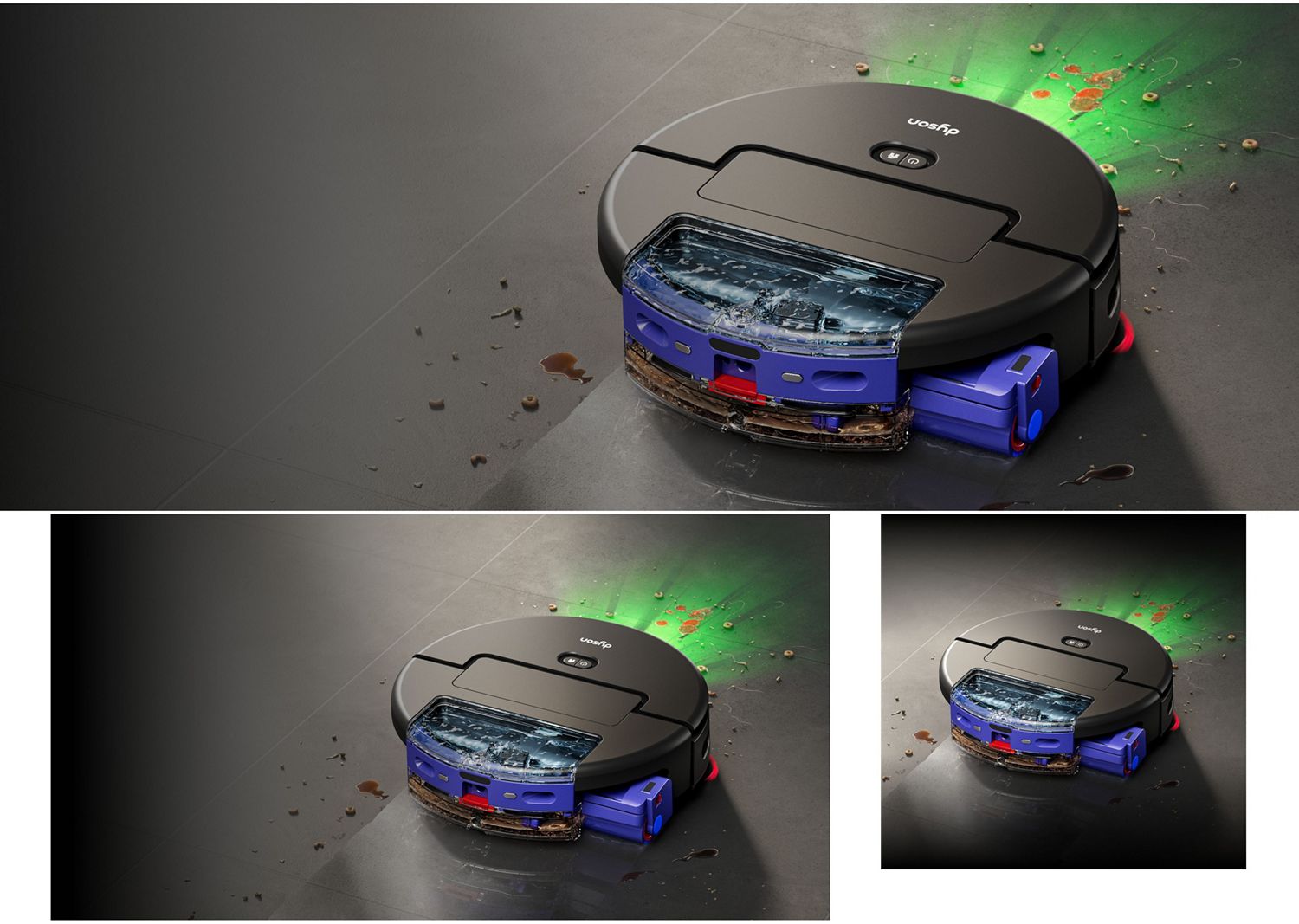
Vacuums. Washes stains again and again. Until gone.
Hygienic wet roller cleans itself on every rotation.
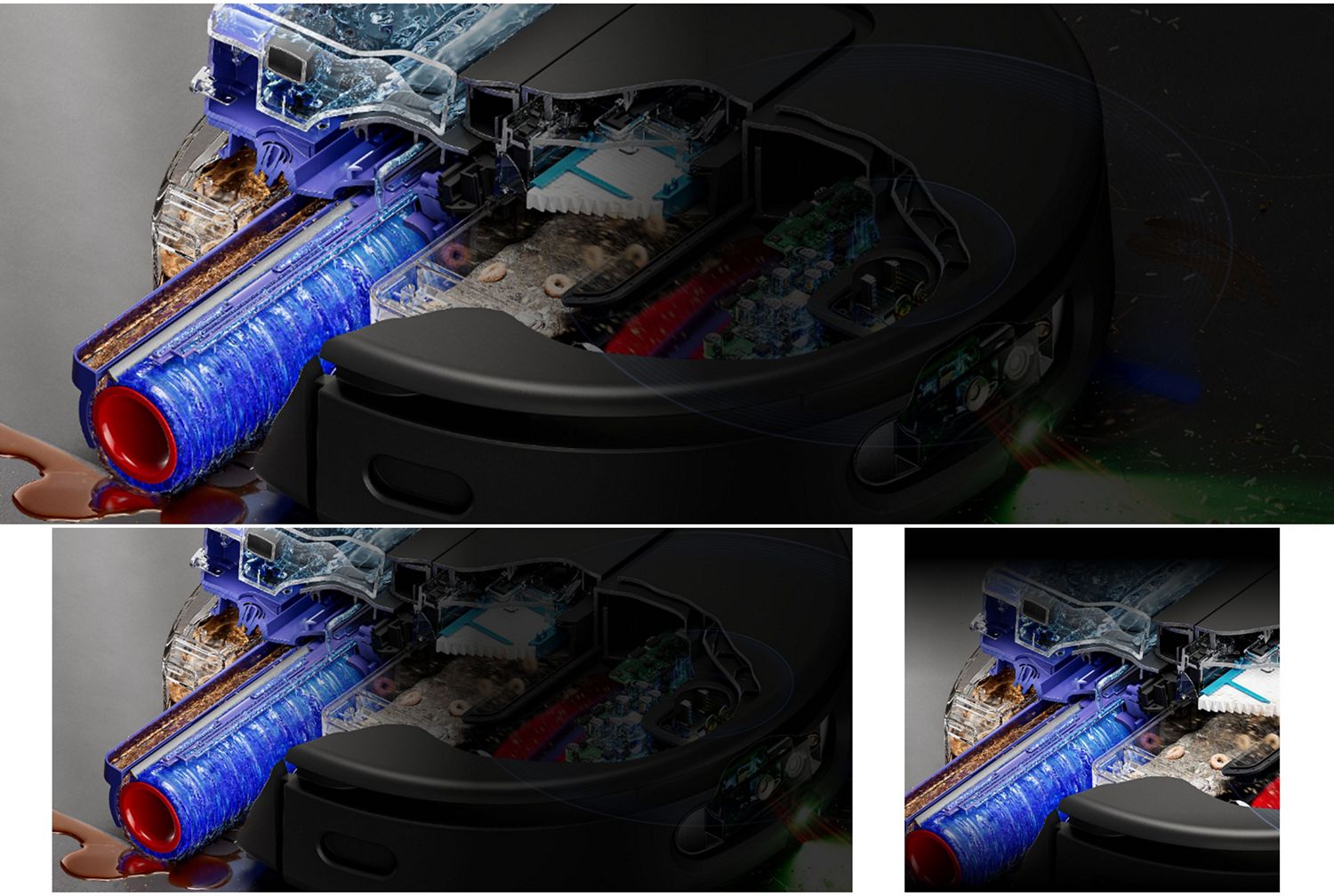
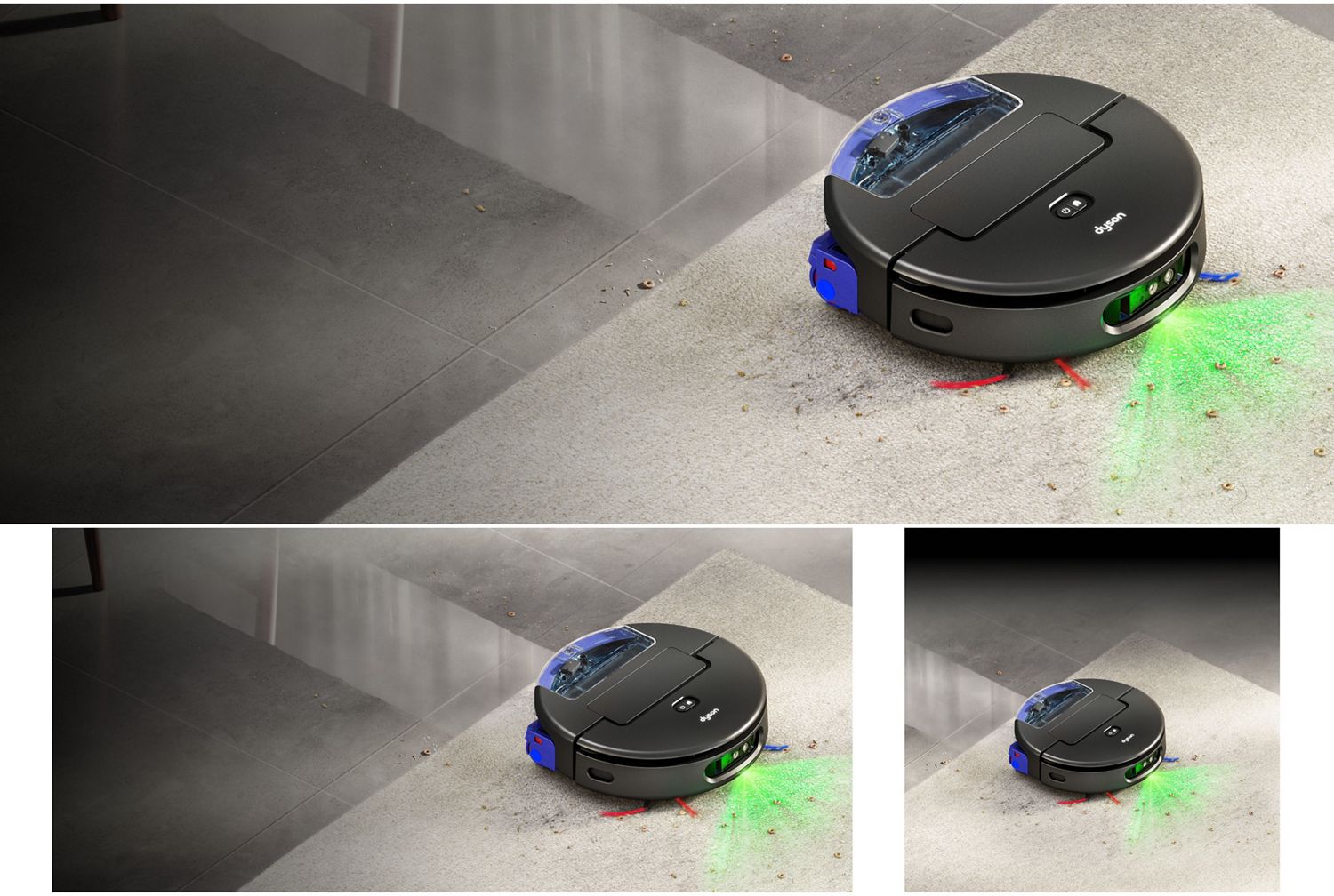
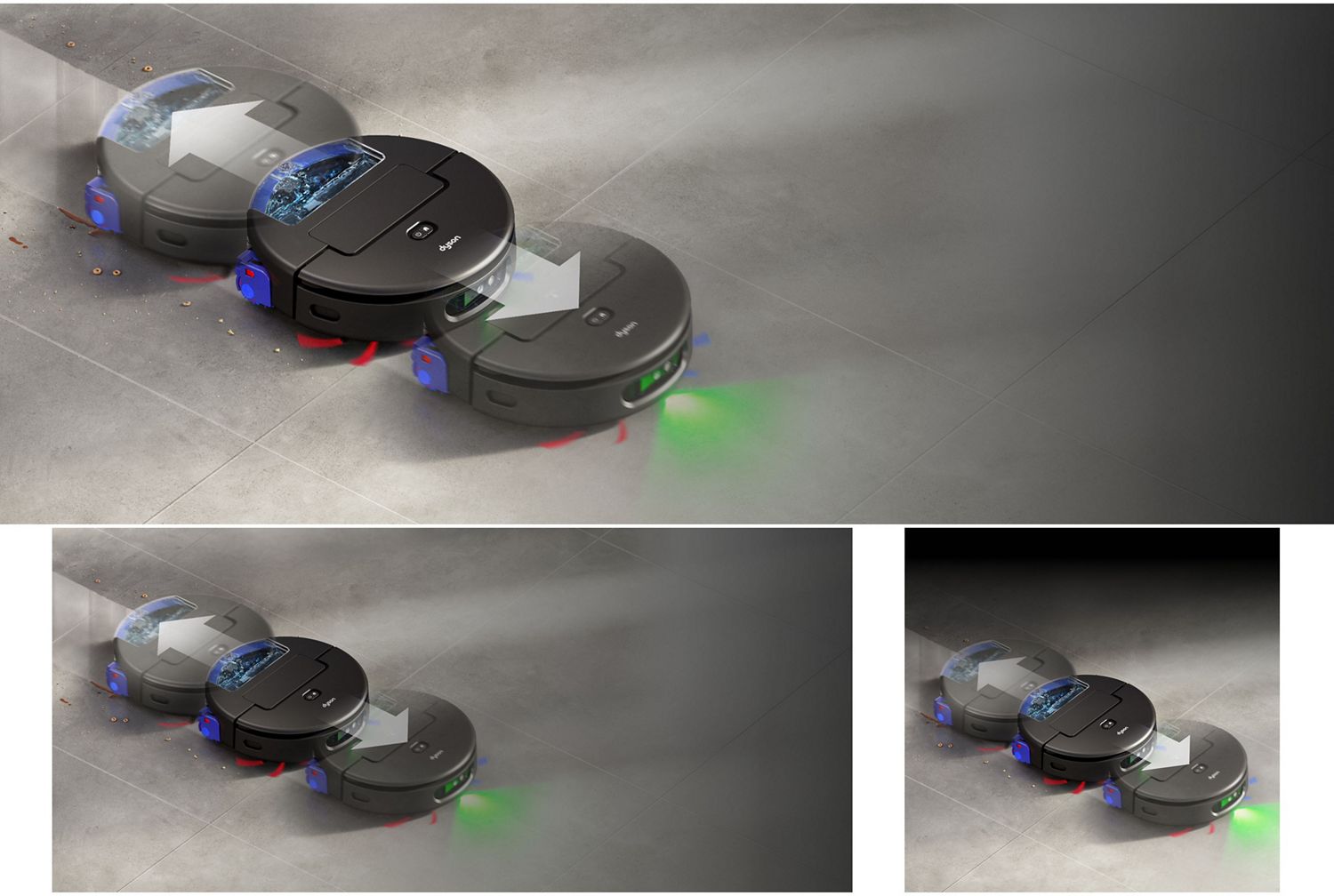
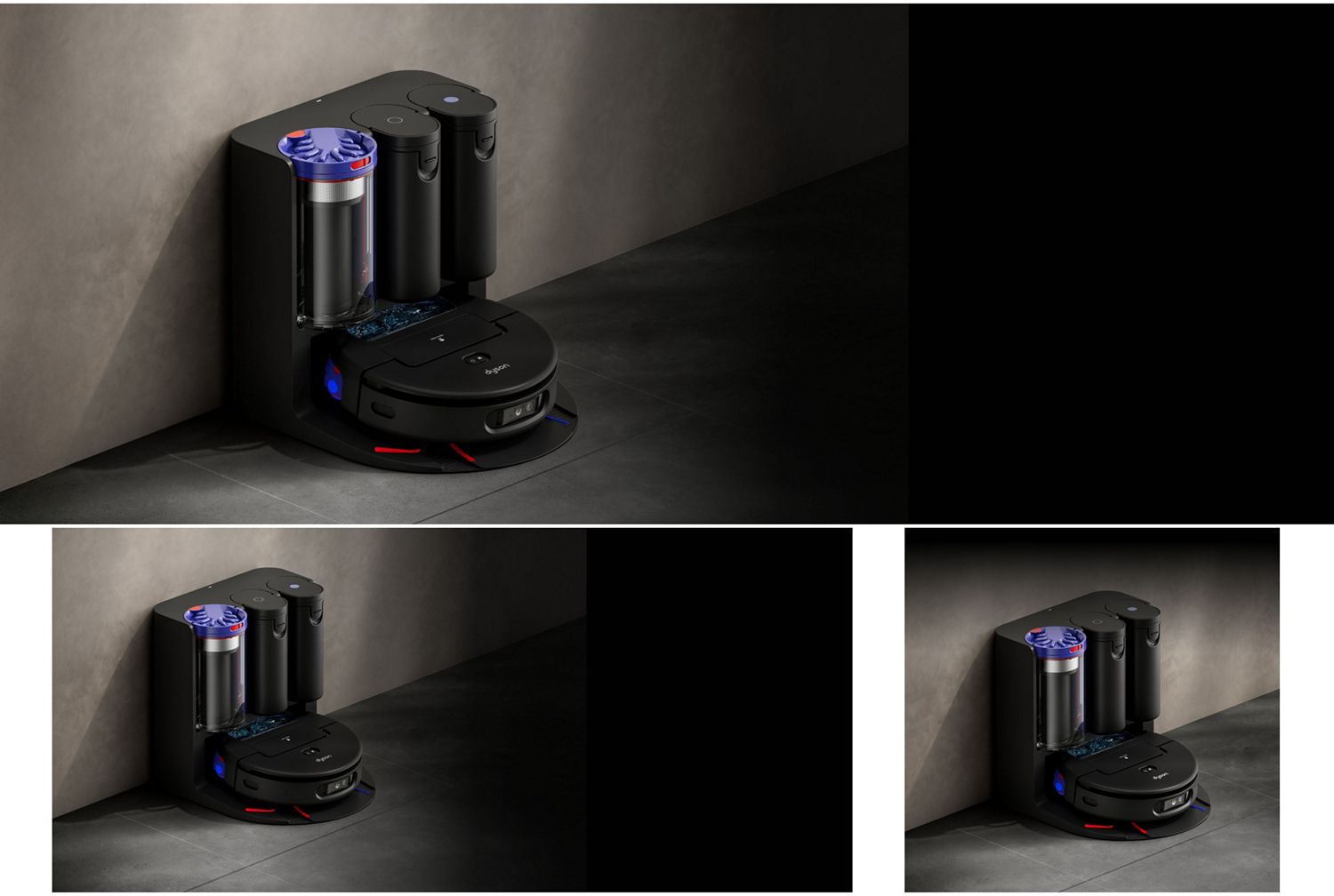
Eliminates hidden stains using advanced Ai.¹ Hygienically. Wet roller cleans itself on every rotation.
Frequently asked questions
The Dyson Spot+Scrub™ Ai robot cleaner is Dyson’s first robotic vacuum designed to vacuum and wash floors. Engineered to detect and identify dirt and stains, react intelligently, clean with precision, then check the dirt or stain has been removed before moving on – it takes the guesswork out of automatic robot cleaning.
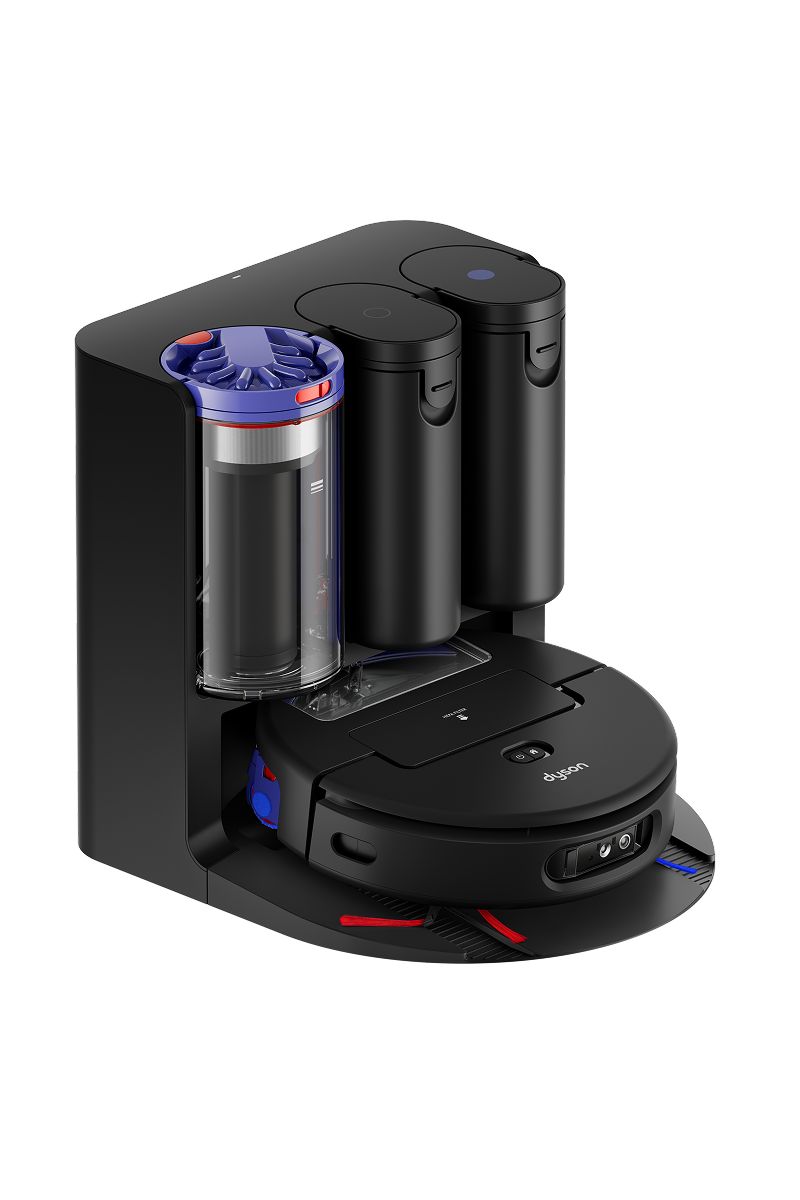
Our robot combines advanced object and debris recognition, smart navigation, and a hygienic self-cleaning wet roller. Its docking station charges and empties the robot, and hygienically cleans and dries the robot’s floor-washing wet roller after every clean. Our robot is engineered to deliver intelligent and uncompromising cleaning throughout your home, vacuuming all floor types and washing all hard floors automatically.
The Dyson Spot+Scrub™ Ai robot vacuum is Dyson’s latest and most advanced robot cleaner. It combines vacuuming, washing and self-cleaning in one intelligent machine. It uses advanced Ai to detect stubborn stains and eliminate hidden dirt, adapts its cleaning strategy in real time and hygienically cleans itself after every use.
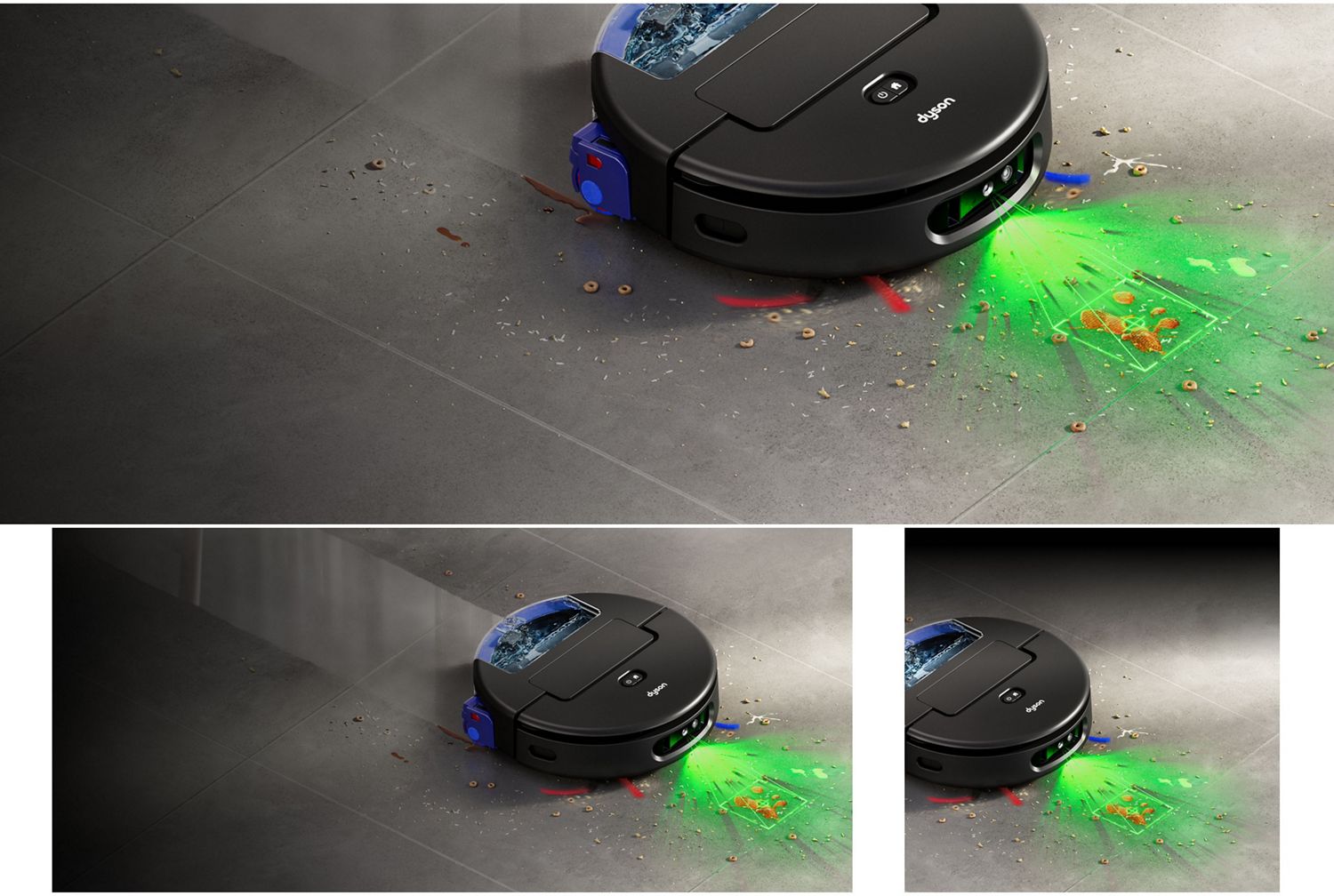
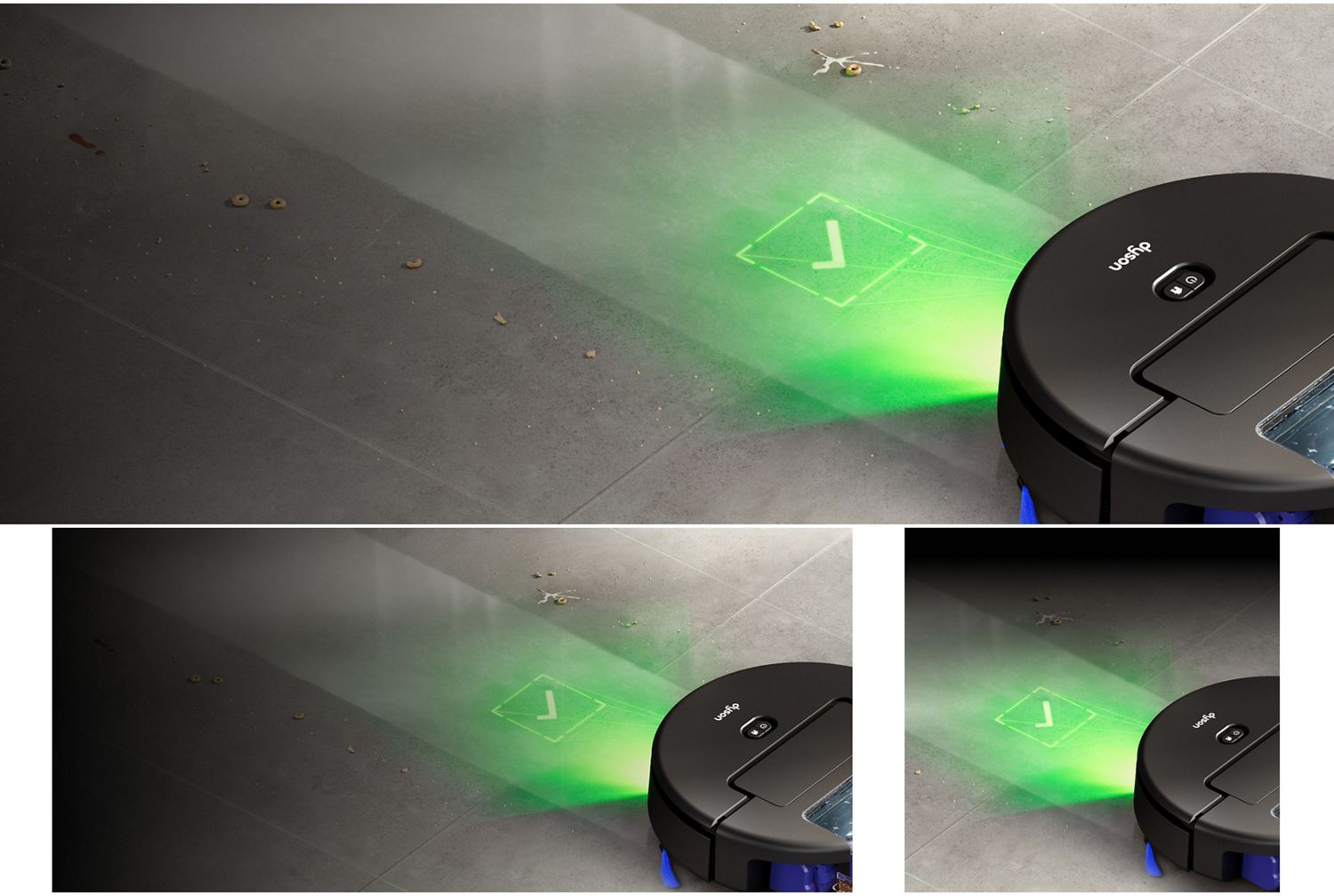
Our robot uses a unique three-step cleaning approach for consistent and precise cleaning. It detects invisible stains and dirt with green-spectrum LED illumination and an Ai-powered camera – which can identify nearly 200 types of hidden household substances. Then it reacts and adapts its cleaning behaviour in real-time to clean the dirt, checks the floor to make sure the dirt, spill or stain has gone, and continues to clean until the stain has been completely removed.
The Dyson Spot+Scrub™ Ai uses a digital motor and has a maximum suction of 18,000Pa.
No, the Dyson Spot+Scrub™ Ai has been engineered for both hard and soft floor types – including sealed wood, tile, laminate, and vinyl, plus low-pile rugs and carpets. Owners can independently fine-tune hydration levels on the robot’s wet roller to suit their preferences and their hard floor.
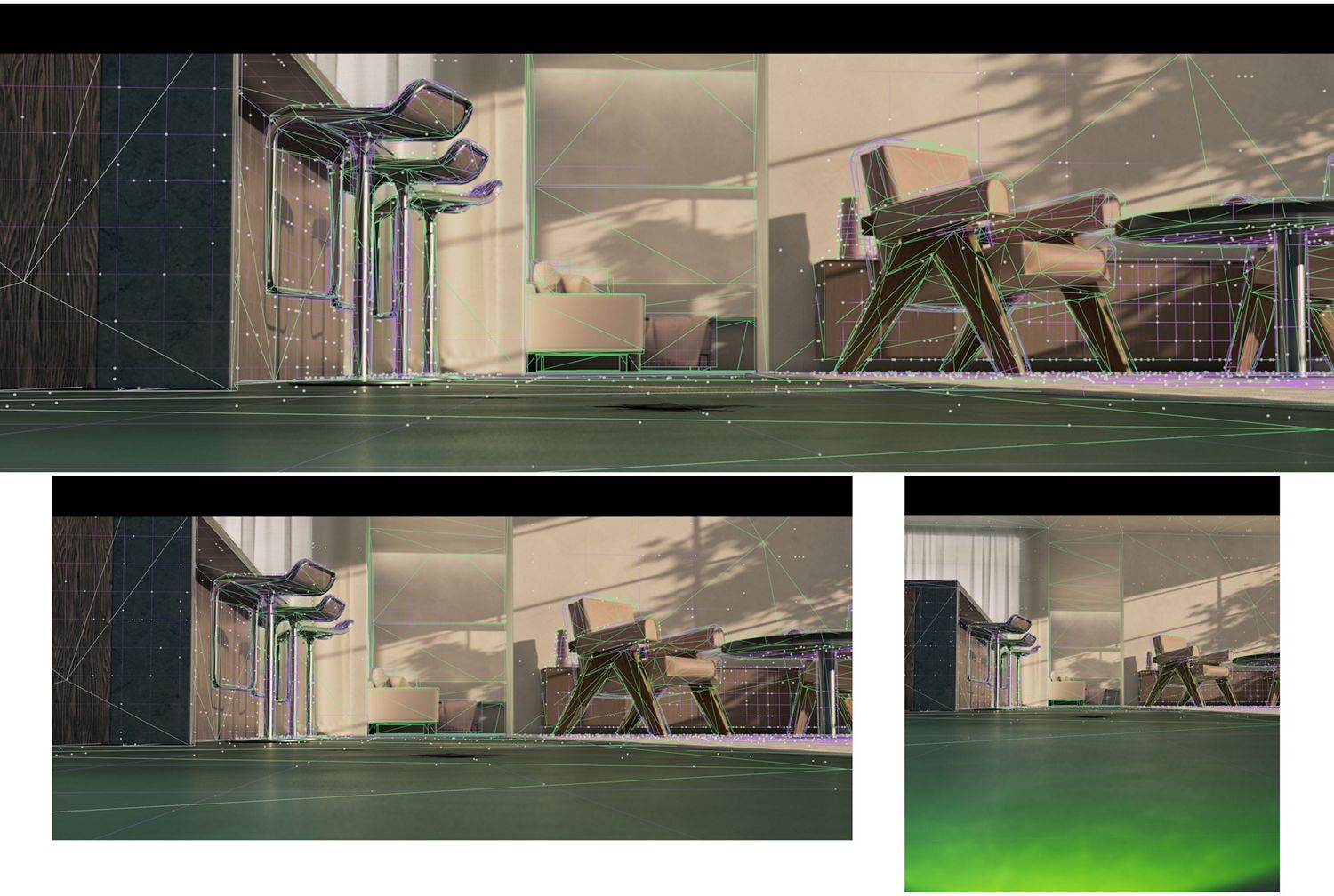
The Dyson Spot+Scrub™ Ai robot uses a combination of LiDAR technology, an Ai-powered front-facing HD camera, green-spectrum LED illumination, a dual-line laser system, plus drop and edge follow sensors to navigate and map homes quickly and effectively.
Our robot is designed to intelligently detect a wide variety of common household objects and furniture, from tables, chairs and sofas, to smaller items such as shoes, socks and cables. It adapts to changes in the home environment, avoids obstacles and adjusts its cleaning behaviour to deliver an uncompromising cleaning performance on both carpets and hard floors.
The Dyson Spot+Scrub™ Ai robot’s new slimline design means it can navigate and clean under objects and furniture with only an 11cm height clearance.
In total, the Dyson Spot+Scrub™ Ai robot comprises 27 individual sensors, including LiDAR pulsed lasers, ultrasonic floor-type sensors, a HD camera powered by Ai, a dual-line laser system, drop sensors and edge-to-edge wall follow sensors. An additional 12 sensors are found in the docking station.
The Dyson Spot+Scrub™ Ai robot can vacuum an area of up to 110m² on a single charge. Coverage can depend on furniture placement and the layout of a home. Since the robot returns to its docking station to recharge, empty and self-clean whenever the battery is low, it can clean much larger areas, charging and cleaning itself as it goes. So it vacuums your carpets with powerful suction – and washes your hard floors with a clean roller every time.
- 1 Suction pressure increases when transition from hard floor to carpet in Auto mode. Performance may vary depending on the mode and floor surface.
- 2 AI verification is within the defined parameter. Results may vary depending on the type of stains. Cleaning results may vary depending on the type and severity of stains
- 3 AI verification is within the defined parameter. Results may vary depending on the type of stains. Cleaning results may vary depending on the type and severity of stains
- 4 Emptying station suction tested in Dyson laboratory to Dyson test protocol.